
Chocolate toxicity in dogs is down to theobromine and caffeine, two stimulants that a dog’s body gets rid of very slowly. How much trouble your dog is in depends on their weight, the kind of chocolate and how much they ate. Enter those below and you’ll see the dose your dog swallowed and what it’s likely to mean.
Why is chocolate toxic to dogs?
Cacao beans contain natural stimulants called methylxanthines. The main one is theobromine, with a little caffeine on top. The human body clears them within a few hours. A dog’s does not. In a dog, theobromine’s half-life is about 17.5 hours, so it builds up and overstimulates the heart and nervous system. Symptoms usually show up 6–12 hours after eating and can hang around for days.
Which chocolate is most dangerous?
Bitterness is the clue: the darker a chocolate is, the more theobromine is packed into it. Ounce for ounce, baking chocolate is about seven times as dangerous as milk chocolate, and cocoa powder more than twelve times. The table lists the types from most to least dangerous.
| Type | Theobromine + caffeine per ounce | Per gram |
|---|---|---|
| Dry cocoa powder | 807 mg | 28.5 mg |
| Unsweetened baking chocolate | 440 mg | 15.5 mg |
| Cocoa bean shells / mulch | 255 mg | 9 mg |
| Dark chocolate, 70–85% cacao | about 250 mg | about 8.8 mg |
| Semisweet / dark chocolate chips | 150–160 mg | 5.3–5.6 mg |
| Milk chocolate | 64 mg | 2.3 mg |
| White chocolate | about 1 mg | 0.04 mg |
Values from the Merck Veterinary Manual; the 70–85% dark chocolate figure is based on USDA food composition data. Real products vary by brand.
White chocolate barely has any theobromine. It’s still not a harmless treat, though. The fat and sugar in it can bring on vomiting and diarrhea and, in some dogs, pancreatitis.
Chocolate toxicity levels
| Dose (mg per kg of body weight) | What can happen |
|---|---|
| Under 20 mg/kg | Serious poisoning unlikely; possible stomach upset |
| 20 mg/kg | Mild signs: vomiting, diarrhea, increased thirst and urination, restlessness |
| 40–50 mg/kg | Heart effects: racing or irregular heartbeat, high blood pressure, agitation |
| 60 mg/kg and above | Tremors and seizures; can be life-threatening |
How much chocolate can a dog eat?
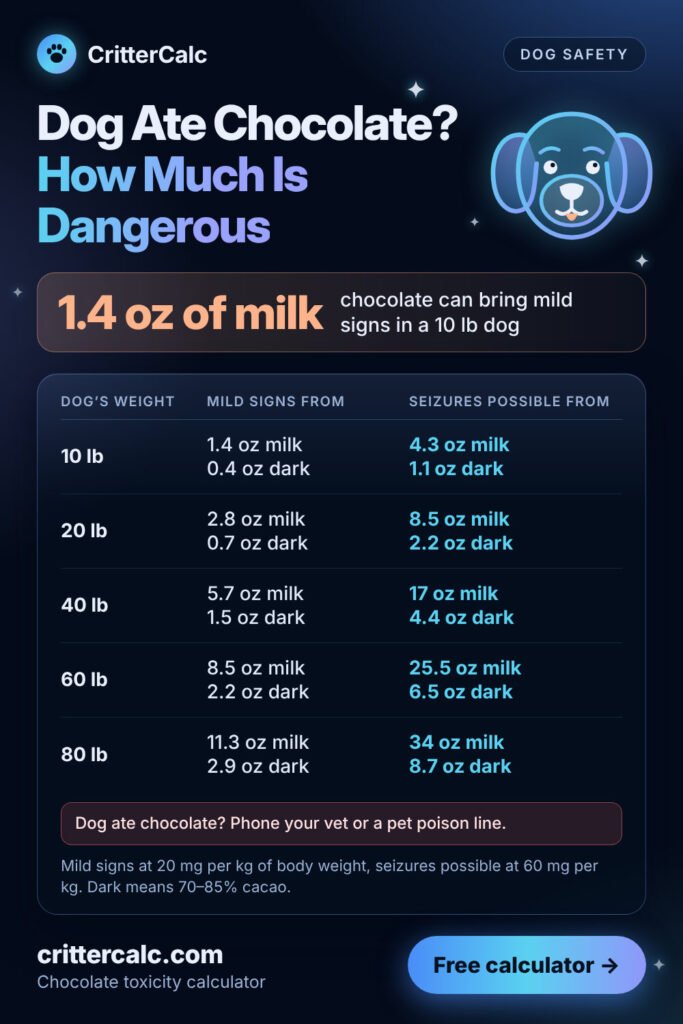
There’s no “safe amount” you should aim for. Still, it helps to know roughly how much milk chocolate it takes to hit each level. For a 70 to 85% dark bar, cut those amounts to about a quarter. For semisweet chips, cut them to about 40%.
| Dog’s weight | Mild signs (20 mg/kg) | Heart effects (40 mg/kg) | Seizures possible (60 mg/kg) |
|---|---|---|---|
| 10 lb (4.5 kg) | 1.4 oz milk (0.4 oz dark) | 2.8 oz (0.7 oz dark) | 4.3 oz (1.1 oz dark) |
| 20 lb (9 kg) | 2.8 oz (0.7 oz dark) | 5.7 oz (1.5 oz dark) | 8.5 oz (2.2 oz dark) |
| 40 lb (18 kg) | 5.7 oz (1.5 oz dark) | 11.3 oz (2.9 oz dark) | 17 oz (4.4 oz dark) |
| 60 lb (27 kg) | 8.5 oz (2.2 oz dark) | 17 oz (4.4 oz dark) | 25.5 oz (6.5 oz dark) |
| 80 lb (36 kg) | 11.3 oz (2.9 oz dark) | 22.7 oz (5.8 oz dark) | 34 oz (8.7 oz dark) |
Put another way: one standard 1.5 oz milk chocolate bar is enough for mild signs in a 10 lb dog. A 3.5 oz bar of 70% dark chocolate could cause seizures in a 20 lb dog.
Symptoms of chocolate poisoning in dogs
- Vomiting (the vomit may smell of chocolate) and diarrhea
- Drinking and peeing a lot more than usual
- Restlessness, hyperactivity or panting
- A racing heart or abnormal heart rhythm
- Muscle tremors, stiffness, seizures
- High body temperature and collapse
The Merck Veterinary Manual gives 6 to 12 hours as the usual start. Emergency clinics often see the first stomach signs sooner, within 1 to 4 hours, so a dog that looks fine an hour later can still get sick that evening. Make the call before any symptoms show.
What to do if your dog ate chocolate
- Figure out what and how much. Dig the wrapper out of the trash, check the cacao percentage and estimate how much is gone. Then put those figures into the calculator above.
- Phone your vet or one of the poison lines above. Have your dog’s weight, the chocolate type and amount, and the time they ate it ready. They will say whether your dog has to be seen.
- No home cures. Making a dog vomit is a job for a vet, or for you only when a vet has asked for it and talked you through each step. Some methods, like salt, are dangerous.
- If they say come in, go quickly. Treatment is simplest and works best in the first couple of hours.
- Keep watching for 24–72 hours, even if your dog seems fine. Call again if any symptoms show up.
A vet’s worked example
Dr. Lauren Schmok of All-Star Veterinary Clinic works through a case in her video on chocolate toxicity. Her own dog weighs 60 lb, and she imagines it eating one 3.5 oz bar of dark chocolate. She counts 230 mg of theobromine per ounce, which makes 805 mg in the bar. A 60 lb dog is about 27 kg, so the dose comes to about 30 mg per kg, a level she places in the moderate group. Two bars, she says, could add a fast heart rate, an abnormal heart rhythm and seizures.
Put the same case into the calculator above and you get about 32 mg/kg, in the mild to moderate band. The small gap has a simple cause. This calculator adds the caffeine in the chocolate to the theobromine, the way the Merck Veterinary Manual counts it.
What happens at the emergency clinic
Megan Brashear, a veterinary technician specialist in emergency and critical care at DoveLewis Emergency Animal Hospital, walks through the treatment in a DoveLewis teaching video. These are the main steps.
- Emptying the stomach. The best window is about one to two hours after the dog ate. Chocolate can sit in the stomach for a long time, so the clinic may still try later. This is a job for the clinic, not for home.
- Activated charcoal. It soaks up toxins in the gut. Most dogs get one dose and go home, while some need repeat doses in hospital.
- Heart and nerve care. Staff watch the heart rate and rhythm and treat a racing heart, tremors or seizures as they appear. Fluids support the circulation.
- Frequent walks. The toxins are taken up again through the bladder wall, so she tells owners to walk the dog often and keep the bladder empty.
She adds that signs can last up to 72 hours, and that many treated dogs go home to a normal life.
One number in that video is higher than ours: it says signs appear at about 100 mg/kg. This calculator stays with the Merck Veterinary Manual, which puts mild signs at 20 mg/kg, because the lower figure is the safer one to act on.
Frequently asked questions
My dog ate one chocolate chip or M&M. Is that dangerous?
For most dogs, no. A single semisweet chip (about 0.3 g) has under 2 mg of theobromine, far below the danger level even for a small dog. The trouble starts with a whole bag, a tray of brownies or a dark chocolate bar.
How long after eating chocolate does a dog get sick?
Usually within 6–12 hours, though vomiting can start within 1 to 4 hours. Theobromine stays in a dog’s body a long time, so in more serious cases symptoms can last 24–72 hours.
Is chocolate cake or a chocolate chip cookie bad for dogs?
It can be, but often for other reasons. Baked goods usually have less chocolate by weight than a plain bar. They can also contain raisins, macadamia nuts, xylitol or raw dough, all of which are dangerous. Give your vet the exact details of what your dog ate.
Can a dog die from eating chocolate?
Yes, but with fast treatment it is uncommon. Large doses of dark chocolate, baking chocolate or cocoa powder can be fatal, especially for small dogs. That’s the reason to call for advice fast.
Is chocolate bad for cats too?
Yes, theobromine is toxic to cats as well. Cats can’t taste sweetness, so they rarely go for chocolate. But they’re small, and even a little dark chocolate or cocoa can cause problems. Call your vet if your cat eats any.
Save to Pinterest